





2026 Chevrolet Traverse Milan IL
See which Chevrolet Traverse models are available for your family space and three-row SUV needs in Milan
Compare Traverse seating, cargo flexibility, and safety features to find the right fit for your household routine
Call Eriksen Chevrolet to confirm which Traverse configurations match your passenger, cargo, and technology priorities
| Sales | ||
| Day | Open | Closed |
| Monday | 8:30AM | 6:00PM |
| Tuesday | 8:30AM | 6:00PM |
| Wednesday | 8:30AM | 6:00PM |
| Thursday | 8:30AM | 6:00PM |
| Friday | 8:30AM | 6:00PM |
| Saturday | 8:30AM | 5:00PM |
| Sunday | Closed | Closed |
2026 Chevrolet Traverse Family SUV Space, Safety, and Capability Insights for Milan Drivers Comparing Three-Row Comfort and Everyday Confidence
Families researching the 2026 Chevrolet Traverse are usually not starting with a broad SUV question. They are trying to confirm whether a three-row vehicle can support passenger space, safety confidence, cargo flexibility, and everyday comfort without becoming difficult to live with over time. That decision stage is more specific than general inventory browsing because the buyer is already weighing school-day routines, car-seat access, parking-lot visibility, grocery and sports gear storage, and how the SUV will perform during highway travel. Chevrolet positions the Traverse around available seating for up to eight, flexible second-row seating, strong cargo capacity, and driver-assistance technology, which closely matches the priorities behind family-focused three-row SUV research.
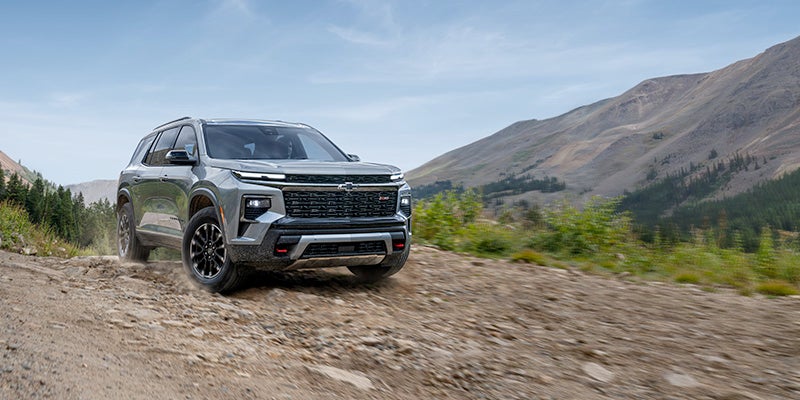
How Traverse three-row space supports changing family needs
One of the biggest research questions behind the Traverse is whether it truly supports family seating demands beyond a simple seat-count claim. The reason that matters is that households do not use a three-row SUV the same way every day. Some days require full-passenger seating for carpools or extended family travel. Other days require a balance of children, backpacks, groceries, and sports equipment. The Traverse addresses that question by pairing available seating for up to eight with flexible second-row configurations, including the choice between a bench seat or captain’s chairs depending on how the family prioritizes access and passenger flow. Chevrolet also highlights a third-row split-folding layout that lets the cabin adapt as routines shift.
That flexibility matters most when families need the SUV to support both regular passenger use and changing cargo demands. A bench can help maximize passenger count, while captain’s chairs can improve second-to-third-row access. Buyers should evaluate how often they expect to carry more than five passengers, whether easier third-row movement matters for children or guests, and whether their normal routine leans more toward full-family seating or mixed seating-and-cargo use. Those questions create a more useful decision path than simply asking whether the Traverse has three rows.
Which safety systems matter most for daily family driving confidence
Another major search theme is how Traverse safety technology actually supports everyday family driving. Safety lists alone do not answer that question because parents and household drivers want to know how these systems function during commuting, school pickup, parking, and highway travel. Chevrolet frames the Traverse around Chevy Safety Assist and additional driver-assistance technology, which indicates that safety reassurance is central to the vehicle’s role in family-oriented shopping. Features such as Forward Collision Alert, Automatic Emergency Braking, and lane support systems are designed to help drivers recognize changing traffic conditions and respond with more confidence.
For a family buyer, what matters is not only feature availability but how the systems are categorized. Awareness features help the driver recognize a developing issue. Intervention-oriented features may assist with braking or steering response under certain conditions. Visibility tools matter most in tighter spaces such as school lots, driveways, and busy parking areas where obstacles, pedestrians, and traffic movement can change quickly. Buyers should evaluate which features are standard on the trim they are considering, whether they want more support during highway commuting or low-speed maneuvering, and how much confidence they place on visibility technology when the vehicle is fully occupied.
- Awareness-focused systems help identify changing traffic conditions before the driver may react on their own.
- Intervention-oriented systems can support braking or lane-position response in limited situations when conditions call for assistance.
- Visibility tools matter most when parking, backing out, and maneuvering in tighter family-driving environments.
Because these systems work differently, buyers should compare them by purpose rather than treating all safety features as interchangeable.
How Traverse supports movement, flexibility, and changing family routines
With the 2026 Winter Olympics centered in Milan, the broader conversation is focused on movement, coordination, and how people navigate shared experiences at scale. While Milan, Illinois represents a very different setting, the underlying household need is familiar. Families are managing daily routines, multiple passengers, and changing cargo demands that require a vehicle designed to adapt without creating added complexity.
The Chevrolet Traverse aligns with that kind of flexibility by supporting multiple configurations within a single SUV. Seating can shift between passenger-focused and cargo-focused layouts, allowing the vehicle to adjust based on the needs of the day. This matters most for households balancing school schedules, weekend activities, grocery runs, and longer travel plans where space and organization directly affect usability.
Buyers should evaluate how easily the Traverse adapts to changing routines. A three-row SUV is not only about maximum capacity. It is also about whether the layout continues to support different types of movement over time, from weekday commuting to family travel and seasonal schedule changes.
What makes Traverse easier to live with during commuting and longer travel
Three-row buyers are also weighing whether the Traverse can balance everyday commuting with longer family travel. That distinction matters because comfort and convenience are not the same thing as space. The Traverse is equipped with a large center display, a digital driver information center, and connected technology that helps support navigation, media access, and day-to-day usability. During commuting, drivers tend to care about visibility, screen clarity, navigation access, and how easy the vehicle feels to manage in traffic. During longer travel, passenger spacing, loading convenience, and row flexibility become more important.
Buyers should evaluate whether they need the Traverse primarily for weekday transportation, repeated highway travel, or a balanced mix of both. That determines whether the stronger decision factor is cabin technology, passenger comfort, or cargo adaptability. This is also where long-term ownership confidence becomes more important. Families often buy a three-row SUV to support several years of changing routines, which means the right choice is not just about current needs but whether the cabin and feature set will still support new activities, older children, and evolving travel habits later.
- Commuting-focused households should pay closest attention to safety support, screen usability, and maneuvering confidence.
- Travel-focused households should prioritize row comfort, storage adaptability, and passenger layout flexibility.
- Mixed-use households should look for the trim and seating setup that balances both without overcommitting to one type of use.
That evaluation helps keep the decision centered on family routine rather than broad SUV marketing language.
What families should evaluate before choosing Traverse as their next SUV
Before selecting a Traverse, families should use a structured evaluation framework rather than relying on isolated specs. The most important questions are whether the seating layout fits the household, whether the safety systems match the driver’s confidence needs, whether cargo flexibility stays practical when passengers are onboard, and whether the vehicle supports both commuting and longer travel. These are the same decision drivers that keep appearing in Traverse research because they reduce uncertainty and clarify whether the SUV is aligned with actual ownership use.
The strongest next step is to compare Traverse configurations based on those household priorities, not just trim names. A family that needs maximum passenger seating may evaluate the interior differently than a family that wants easier second-row access. A buyer prioritizing parking-lot visibility and school-route driving may weigh safety features differently than a buyer preparing for frequent road trips. When those decision factors are clearly defined, the Traverse becomes easier to assess as a long-term household vehicle rather than just another three-row option in the segment.
(Note: This article focuses on providing valuable information and does not mention specific pricing, for more information about financing and car buying, please reach out to our dealership.)